Sooner or later, a lot of Florida drivers hit the same point. Maybe the paint is starting to look tired after years in open parking lots. Maybe you have simply had enough of silver. Either way, there are two ways to change the color of a car: wrap it or repaint it.
Both get you a new color. They do not cost the same, they do not age the same way under Central Florida sun, and they have very different effects on what your car is worth when you sell it. Here is how they compare, from a shop that installs vinyl wraps in Wildwood for drivers across The Villages, Lady Lake, and Leesburg.
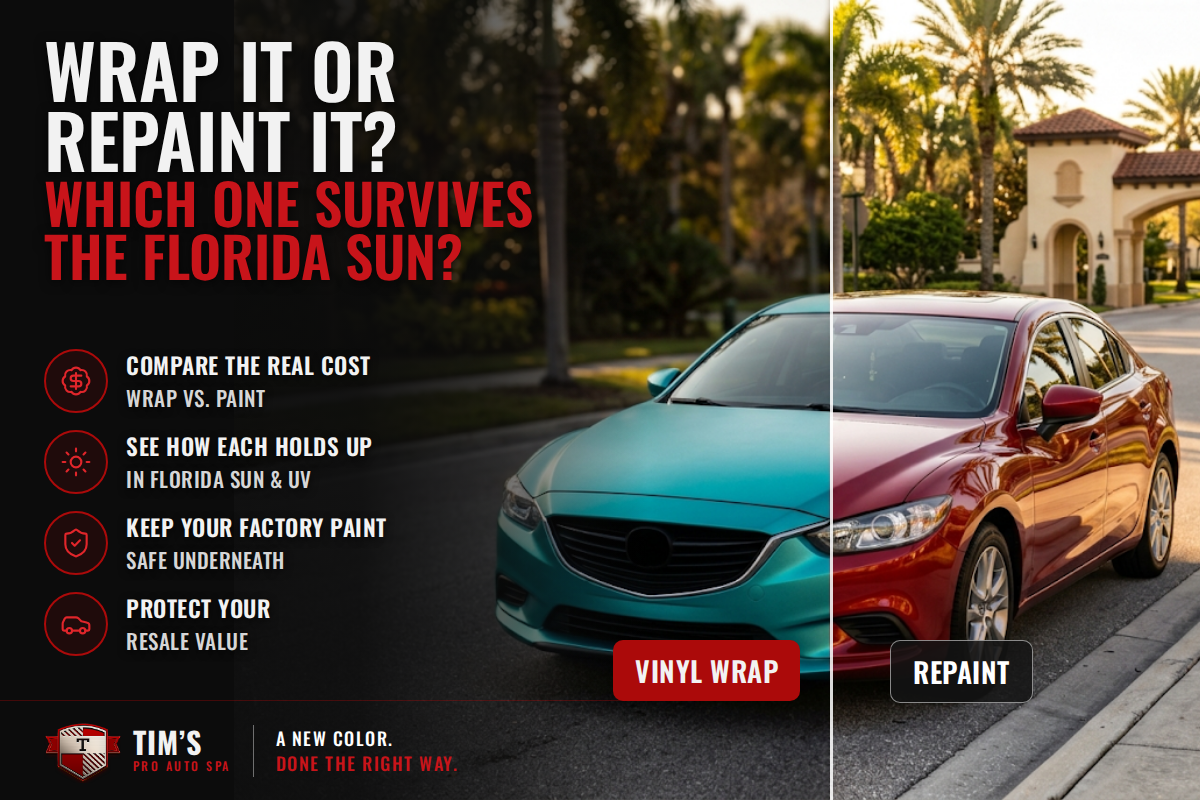
The short answer: If your factory paint is in good shape and you want a new color, a wrap is usually the better value, and you can take it off later. If your paint is already peeling, rusting, or badly damaged, a wrap will not hide that. Fix the paint first.
What each option costs
Price is usually the first question, so here are the typical ranges. These are national ballpark numbers for a sedan or small SUV. Trucks, large SUVs, and specialty finishes cost more.
| Option | Typical range* | What you get |
|---|---|---|
| Full color-change wrap | $2,500 – $5,000 | Premium cast vinyl over the whole exterior. Door jambs are usually an add-on. |
| Specialty wrap (chrome, color-shift) | $5,000 – $10,000+ | Harder films to install, more material waste, shorter outdoor life. |
| Budget repaint | $1,000 – $3,000 | Usually same color, exterior only, minimal prep. Quality varies a lot. |
| Quality color-change repaint | $8,000 – $15,000+ | Full prep plus door jambs, under the hood, and inside the trunk lid. |
*National ballpark figures for comparison only. Your price depends on vehicle size, film or paint choice, and the condition of the car.
Estimated pricing at Tim’s Pro Auto Spa: a full color-change wrap starts at around $2,800 for a sedan, $3,500 for a small SUV, and $4,500 or more for a full-size truck or large SUV. Adding door jambs typically runs about $500 to $1,000 extra.
*Estimate only. Actual pricing and timing may change based on your vehicle’s size, condition, and the options you choose. Contact us at (352) 277-4721 for details.
Why is a proper color-change repaint so expensive? Because doing it right means painting the places you only see when a door, hood, or trunk is open. Skip those areas and every time you open the door, the old color is staring back at you. That is a lot of extra labor. A wrap can cover door jambs too, but it is still far less work than paint.
What Florida sun does to a wrap
Vinyl is a plastic film, and UV light and heat are what wear it out. In Florida, you get plenty of both, most of the year.
- Horizontal panels go first. The hood, roof, and trunk take the sun straight on. That is where you will see fading, and eventually cracking, long before the doors show any wear.
- Garage vs. parking lot makes a big difference. A wrapped car that lives in a garage and goes out for errands will last much longer than one parked all day in the sun at a job or a town square lot.
- Finish matters. Gloss and satin films generally hold up better outdoors than chrome and color-shift films, which manufacturers rate for shorter outdoor use.
- Dark colors run hotter. Black and deep colors absorb more heat, which adds stress to the film and the adhesive.
For most wraps in our area, expect roughly 2 to 4 years of good looks, depending on sun exposure, how the car is cared for, and the quality of the installation. Signs that a wrap is near the end of its life: faded or blotchy color on the hood and roof, edges starting to lift, and small cracks on horizontal panels.
From our shop: On cars around The Villages, the hood and roof are almost always the first to go, because they sit flat under the sun all day. The drivers whose wraps last longest do two simple things: they park in the shade or a garage whenever they can, and they get lovebugs and bird droppings off within a day or two instead of letting them bake on.
We install premium cast vinyl films, which are made to stretch around curves and hold their color longer than cheaper calendered films. Ask us which brands and finishes we recommend for your car and how you plan to use it.
What Florida sun does to paint
Paint is more permanent than vinyl, but it is not immune to the sun either. UV slowly breaks down the clear coat, the top protective layer. First the paint goes dull and chalky. Then the clear coat starts to peel, usually on the roof and hood first. You have seen it in parking lots all over Florida: older cars with white, flaky patches on top.
How long a repaint lasts depends mostly on how well it was done. A quality repaint with good prep and a proper clear coat can hold up for many years with regular care. A cheap respray with thin clear coat can start failing in a few years, which is why the lowest quote is rarely the best deal.
Whichever you choose, a layer of protection on top adds years. A ceramic coating adds UV resistance and makes washing easier, and paint protection film adds a physical barrier against rock chips from roads like I-75 and US-301.
Removal and resale value
This is where the two options differ most.
A wrap comes off. When you are ready to sell, trade in, or return a lease, it can be removed and the original factory color is still underneath. And because the vinyl has been blocking UV and light scratches the whole time, the paint under a well-kept wrap usually looks much like it did the day the wrap went on.
Two honest caveats. First, a wrap left on long past its lifespan, baking in the sun, gets harder to remove and can leave adhesive residue that takes extra work to clean up. Second, wraps should go over sound factory paint. On a car that has been repainted poorly, or has failing clear coat, removal can pull paint off with the vinyl. A good installer will check the paint before starting and tell you if it is not a good candidate.
A color-change repaint is permanent. Many buyers and dealers prefer the factory color, and a car in a non-original color can raise questions about whether it was in an accident. That can mean a lower trade-in offer. Whichever way you go, let your insurance company know about the change.
Side-by-side comparison
| Vinyl wrap | Repaint | |
|---|---|---|
| Cost for a quality color change | Lower | Higher |
| Time in the shop | About 3–5 days* | Often 1–3 weeks |
| Life in Florida sun | About 2–4 years; longer if garaged | Many years if done well; cheap jobs can fail early |
| Reversible | Yes | No |
| Protects original paint | Yes | No, it replaces it |
| Fixes damaged paint | No | Yes |
| Effect on resale | Usually neutral once removed | Can lower value if not factory color |
| Finish options | Gloss, satin, matte, chrome, color-shift | Gloss is standard; matte paint is hard to maintain and repair |
*Estimate only. Actual pricing and timing may change based on your vehicle’s size, condition, and the options you choose. Contact us at (352) 277-4721 for details.
Which one is right for you?
A wrap makes more sense if:
- Your factory paint is in good condition, with no peeling or rust.
- You want to try a color or a matte finish without committing to it for life.
- The car is leased, or you plan to sell or trade it in within a few years.
- You want to keep the original paint protected underneath.
A repaint makes more sense if:
- The clear coat is peeling, there is rust, or there is damage that needs bodywork anyway.
- You want a permanent change and plan to keep the car for a long time.
One thing people often ask: can you wrap over bad paint to cover it up? We do not recommend it. Vinyl needs a smooth, solid surface to stick to. It will show every chip and ridge underneath, and peeling clear coat can keep flaking under the film. If the paint only has swirls, light scratches, or oxidation, paint correction before wrapping is often enough.
How to make a wrap last in Florida
- Hand wash every week or two with a pH-neutral car soap. Skip automatic car washes with brushes.
- Go easy with the pressure washer. Keep the nozzle at least a foot away and never aim it straight at edges or seams, where it can lift the film.
- Get bugs and bird droppings off fast. Lovebug season (late spring and again in late summer) is hard on vinyl. Soften the residue with a wet microfiber towel for a few minutes instead of scrubbing.
- Park in the shade or a garage whenever you can. This is the single biggest factor in how long a wrap lasts here.
- Matte and satin wraps need their own products. Wax and polish fill the texture and leave shiny patches that cannot be fixed.
- Ask about a ceramic coating made for vinyl. It adds a layer of UV protection and makes bugs and grime easier to wash off. Contact us for details on options for your wrap.
Frequently asked questions
Does a vinyl wrap damage car paint?
Not when it goes over factory paint in good condition and is removed within its lifespan. The risk comes from wrapping over repainted or failing paint, or leaving a wrap on for years after it has worn out.
How long does a car wrap last in Florida?
Most last about 2 to 4 years here. A car that is garaged and washed regularly will be at the top of that range; one parked in full sun every day will be at the bottom.
Is it cheaper to wrap or paint a car?
For a quality color change, a wrap usually costs less. A budget repaint can be cheaper up front, but it is usually the same color, and the quality is hard to predict.
Can I wash a wrapped car at a car wash?
Touchless car washes are generally fine now and then. Avoid brush washes, which can scratch the film and catch lifted edges.
Thinking about a new color?
Bring your car by and we will look at the paint, walk you through film colors and finishes, and give you an honest answer on whether a wrap or paint makes more sense. See our vinyl wrap and color change service, or ask about financing options.
Get a quote: call (+1) 352 277 4721 or visit Tim’s Pro Auto Spa at 2840 County Road 523, Unit C10, Wildwood, FL 34785. Open Monday to Saturday, 10 AM to 6 PM.