
Most homes in The Villages have one room everybody avoids in the afternoon.
Usually it is the one facing west. The sun pours through the sliding doors to the lanai, the air conditioner runs nonstop, and the glare on the TV makes it hard to see anything.
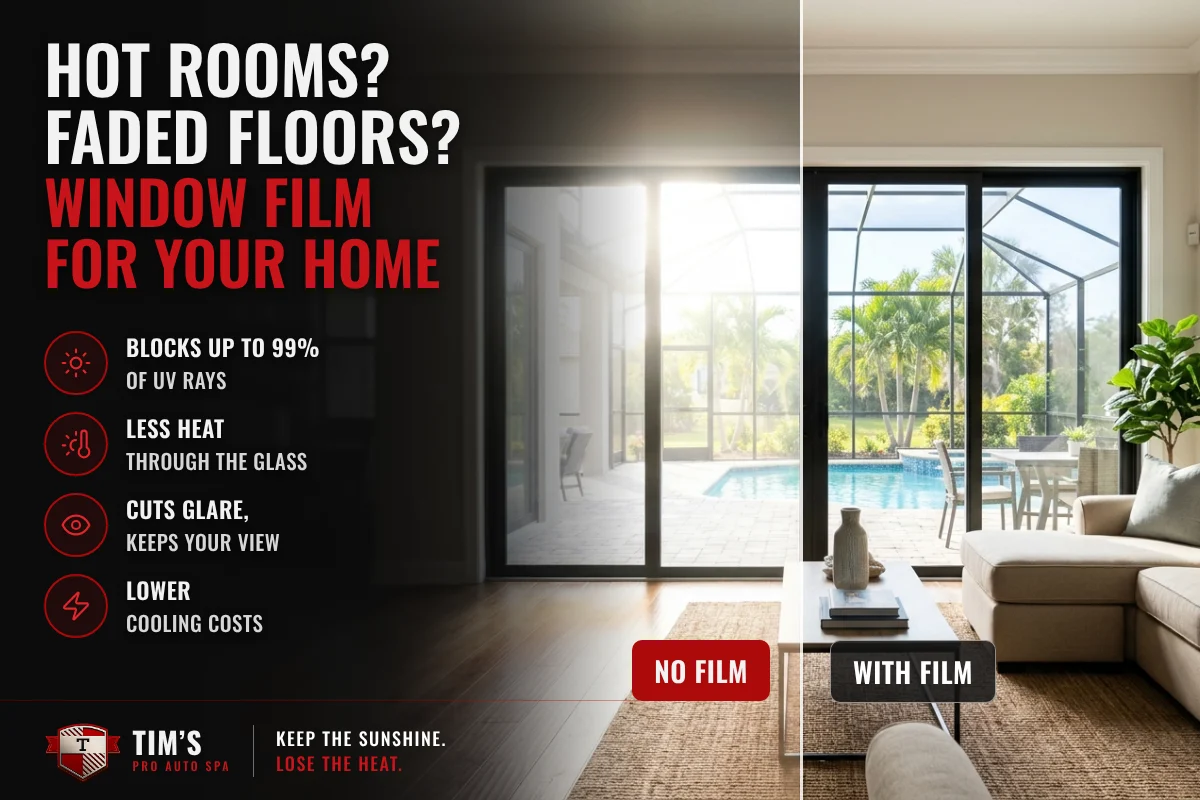
You close the blinds, and the room goes dark.
Then one day you move the couch and notice the floor underneath is a different color than the rest of the room.
That is the Florida sun at work, every single day.
Window film is one of the simplest ways to push back, without giving up the light and the view you moved here for.
The Sun Is Hard on More Than Your Car
We spend a lot of time talking about what Florida sun does to paint. It does the same kind of slow damage inside your home.
UV rays fade hardwood floors, rugs, upholstery, artwork, and cabinets. Heat coming through large windows and sliding doors warms rooms well past the thermostat setting. And glare bouncing off pools, lakes, and light-colored concrete makes some rooms uncomfortable for hours.
None of it happens overnight. Like paint damage, it adds up quietly until you notice it.
What Residential Window Film Actually Does
Residential window film is a thin, professionally installed layer applied to the inside of your existing glass.
Quality films can block up to 99% of harmful UV rays, which is the biggest cause of fading. They reduce the heat coming through the glass, so rooms stay cooler and the AC does not have to work as hard. They cut glare on screens and floors. And depending on the film, they can add daytime privacy, too.
Many homeowners also see lower cooling costs. Depending on the home and the film, energy bills can drop by up to 30%.
The best part is that you keep your view. Good film is designed to let natural light in while keeping much of the heat and UV out.
Choosing the Right Film for a Florida Home
Not every window film is the same, and the right one depends on what bothers you most.
Ceramic films are a favorite in Florida. They reject heat well while staying clear and non-reflective, so your home looks the same from the outside.
Dual-reflective films have a more reflective exterior for strong heat rejection and daytime privacy, with a lower-reflection interior side so they are easier to see through at night.
Privacy and frosted films work well for bathrooms, front doors, and street-facing windows where you want light without being seen.
For most homes in our area, ceramic or dual-reflective films offer the best mix of comfort, heat control, and appearance. We will help you match the film to each room rather than using one film everywhere.
The Rooms That Benefit Most
If you are not ready to do the whole house, start where the sun hits hardest.
West-facing rooms and sliding doors to the lanai usually make the biggest difference. Large living room windows and sunrooms come next. Bedrooms that get early morning sun are another favorite, especially for late sleepers.
Golf course and lake view homes often have big windows facing open space, which means more glare and more heat. Those homes tend to see results right away.
What It Costs and How Long It Lasts
For homes, residential window film at Tim’s Pro Auto Spa typically averages $6 to $12 per square foot, depending on the film type, window sizes, and how much glass is covered.
Most residential jobs are done in about 2 to 4 hours, so there is very little disruption to your day.
With proper care, quality films from brands like Llumar and 3M last 10 to 20 years.
*Pricing and timing as listed on our Residential & Commercial Tinting page at the time of writing. Your price depends on your windows and film choice. Contact us at (352) 277-4721 for details.
A Few Things to Know Before You Tint
Check with your HOA or community rules. Some neighborhoods have guidelines on how reflective exterior-facing film can be. A non-reflective ceramic film is usually the easiest choice when that is a concern.
Ask about your window warranty. Some window manufacturers have conditions about aftermarket film, especially on certain double-pane units. It is worth checking before installation.
Give it time to cure. Wait about 30 days before cleaning newly tinted windows. After that, use an ammonia-free glass cleaner and a soft microfiber cloth.
Why Local Drivers Trust Tim’s Pro Auto Spa
Most people know us for car window tint, paint protection film, and ceramic coating. The same experience with film and the same attention to detail go into every home we work on.
Our shop is in Wildwood, just minutes from The Villages, and many of our residential customers first came to us for their cars.
We will look at your rooms, talk through what bothers you most, and recommend the right film for each space. No pressure and no unnecessary upsells. If you would like to spread out the cost, ask about our financing options.
Final Thoughts
You moved to Florida for the sunshine.
Window film lets you keep enjoying it, without the hot rooms, the glare, or the faded floors.
Protect your home the same way you protect your car, and that west-facing room might just become your favorite spot in the house.
See our residential and commercial window tinting service for more details.
Get a quote: call (+1) 352 277 4721, contact us online, or visit Tim’s Pro Auto Spa at 2840 County Road 523, Unit C10, Wildwood, FL 34785. Open Monday to Saturday, 10 AM to 6 PM.